The restaurant industry is experiencing a massive technological shift. Today, serving great food is only half the battle; the other half is operational efficiency. If your front-of-house (FOH) staff is using one app for reservations, your kitchen is using another for order ticketing, and your back-office is tracking inventory on a messy spreadsheet, you are losing money.
This fragmentation is exactly why more hospitality brands are turning to custom software development for restaurants. Instead of forcing your unique kitchen workflows to adapt to rigid, boxed software, custom solutions mold the technology to fit your business.
In this comprehensive guide, we will explore why generic tech stacks are failing modern eateries, the core features you need in a custom build, and how investing in bespoke software can dramatically improve your bottom line.
Why Off-the-Shelf Software Fails Modern Restaurants
Most restaurants begin their digital journey with Software-as-a-Service (SaaS) products. While these are great for getting off the ground, they present severe limitations as you scale:
- Subscription Fatigue: Paying monthly fees for a Point of Sale (POS) system, a separate inventory tracker, a staff scheduling app, and a third-party delivery aggregator quickly eats into razor-thin profit margins.
- Data Silos: When your systems don't talk to each other, you can't get a clear picture of your business. If your POS doesn't instantly deduct ingredients from your inventory management system, you risk 86'ing items during a dinner rush.
- Lack of Ownership: Third-party delivery and reservation apps own your customer data. You cannot easily retarget a loyal customer if you don't own their contact information and order history.
- Rigid Workflows: A fast-casual taco joint has entirely different operational needs than a fine-dining steakhouse. Generic software forces both into the same operational box.
Custom software development eliminates these hurdles by building a centralized hub owned entirely by you.
Key Features of Custom Restaurant Management Software
When you engage in custom software development for restaurants, you get to choose exactly which modules your business needs. Here are the most impactful features modern hospitality businesses are building:
1. Unified Point of Sale (POS) Integrations
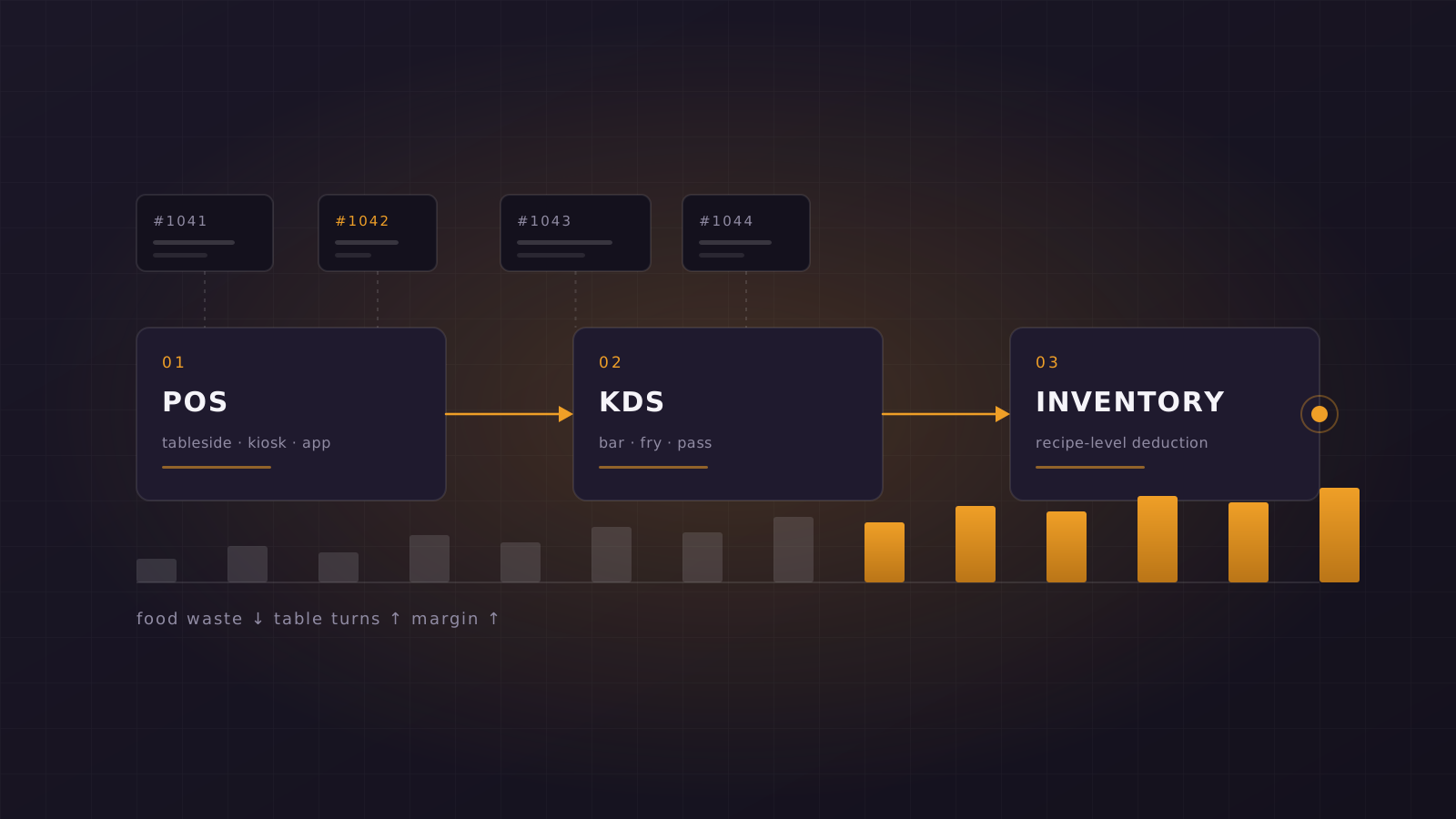
A custom POS system does more than just process payments. It acts as the nervous system of your restaurant. Custom development allows you to integrate tableside ordering tablets, self-service kiosks, and mobile app orders into one single stream. This omnichannel approach ensures that whether a customer orders via their smartphone or at the counter, the data flows seamlessly into your financial reporting.
2. Intelligent Kitchen Display Systems (KDS)
The days of paper tickets getting lost on the prep line are over. A custom KDS routes orders directly from the POS to the correct kitchen station. For example, drink orders go immediately to the bar, while appetizer tickets hit the fry station. You can custom-code color alerts for ticket times, ensuring no table waits too long, which drastically improves table turnover rates.
3. Predictive Inventory and Recipe Management
Food waste is a silent profit killer. Custom software can track inventory down to the ounce. By inputting your recipes into the system, the software automatically deducts the exact amount of cheese, sauce, and dough used every time a pizza is sold. Furthermore, leveraging AI, these systems can analyze historical sales data to predict exactly how much produce you need to order for the upcoming weekend, preventing both over-ordering and stockouts.
4. Bespoke Customer Relationship Management (CRM)
Owning your audience is critical. A custom CRM tracks what your regulars order, their average spend, and their dining frequency. You can automate birthday discounts, push notifications for seasonal menu changes, and build a loyalty program that doesn't rely on a third-party vendor taking a 30% cut.
The ROI: Why Custom Software is an Investment, Not an Expense
While the upfront cost of custom software development for restaurants is higher than a standard SaaS subscription, the Return on Investment (ROI) is substantial and long-lasting.
- Eliminated Monthly Fees: Once the software is built, you own it. You are no longer paying compounding licensing fees for every new terminal or location you open.
- Reduced Labor Costs: Automating inventory counts, staff scheduling, and payroll integrations saves your management team dozens of hours a week — time they can spend on the floor improving the guest experience.
- Increased Revenue: By streamlining the ordering process and utilizing data-driven upselling prompts on digital menus, average ticket sizes naturally increase.
Choosing the Right Development Partner
Building a custom tech stack requires a partner who understands both cutting-edge code and the nuances of the hospitality industry. As a software development company in India that ships production POS, kitchen and inventory systems end to end, this is where SoftSolutionsAI excels.
Specializing in AI-driven and customized tech infrastructures, SoftSolutionsAI bridges the gap between culinary art and digital efficiency. Whether you need a centralized dashboard to manage a multi-location franchise or an AI-powered inventory predictor for a boutique cafe, the engineering team builds scalable, secure, and intuitive platforms. By partnering with experts who understand custom software development for restaurants, you ensure your technology grows alongside your brand, rather than holding it back.
Frequently Asked Questions
What is custom software development for restaurants?
It is the process of designing, building, and deploying software applications tailored specifically to the unique operational, front-of-house, and back-of-house needs of a specific restaurant or hospitality group, rather than using generic, off-the-shelf products.
How much does custom restaurant software cost?
The cost varies widely based on complexity. A basic custom ordering app may start around $15,000, while a comprehensive enterprise system with a POS, CRM, and KDS can exceed $50,000. However, the elimination of monthly SaaS fees often results in a full return on investment within 18 to 24 months.
How long does it take to build custom restaurant software?
Typically, a custom software project for a restaurant takes anywhere from 3 to 6 months. This includes the discovery phase, UI/UX design, core development, integration with existing hardware, and rigorous bug testing before deployment.
Can custom software integrate with my existing accounting tools?
Yes. One of the primary benefits of custom development is the ability to build specific APIs that connect directly to your preferred accounting software (like QuickBooks or Xero), automating your financial reporting and payroll.
Conclusion
In an increasingly competitive hospitality landscape, relying on disjointed apps and manual data entry is a recipe for stagnation. Custom software development for restaurants empowers owners to take control of their data, streamline kitchen operations, and deliver a frictionless experience to their diners.
By making the leap from generic subscriptions to bespoke solutions, you are building a scalable foundation for the future. Ready to transform your restaurant's operations? Explore how tailored technology can elevate your brand at SoftSolutionsAI.