However, building an in-house engineering team to handle complex, scalable custom projects is incredibly expensive, time-consuming, and difficult to manage given the global tech talent shortage.
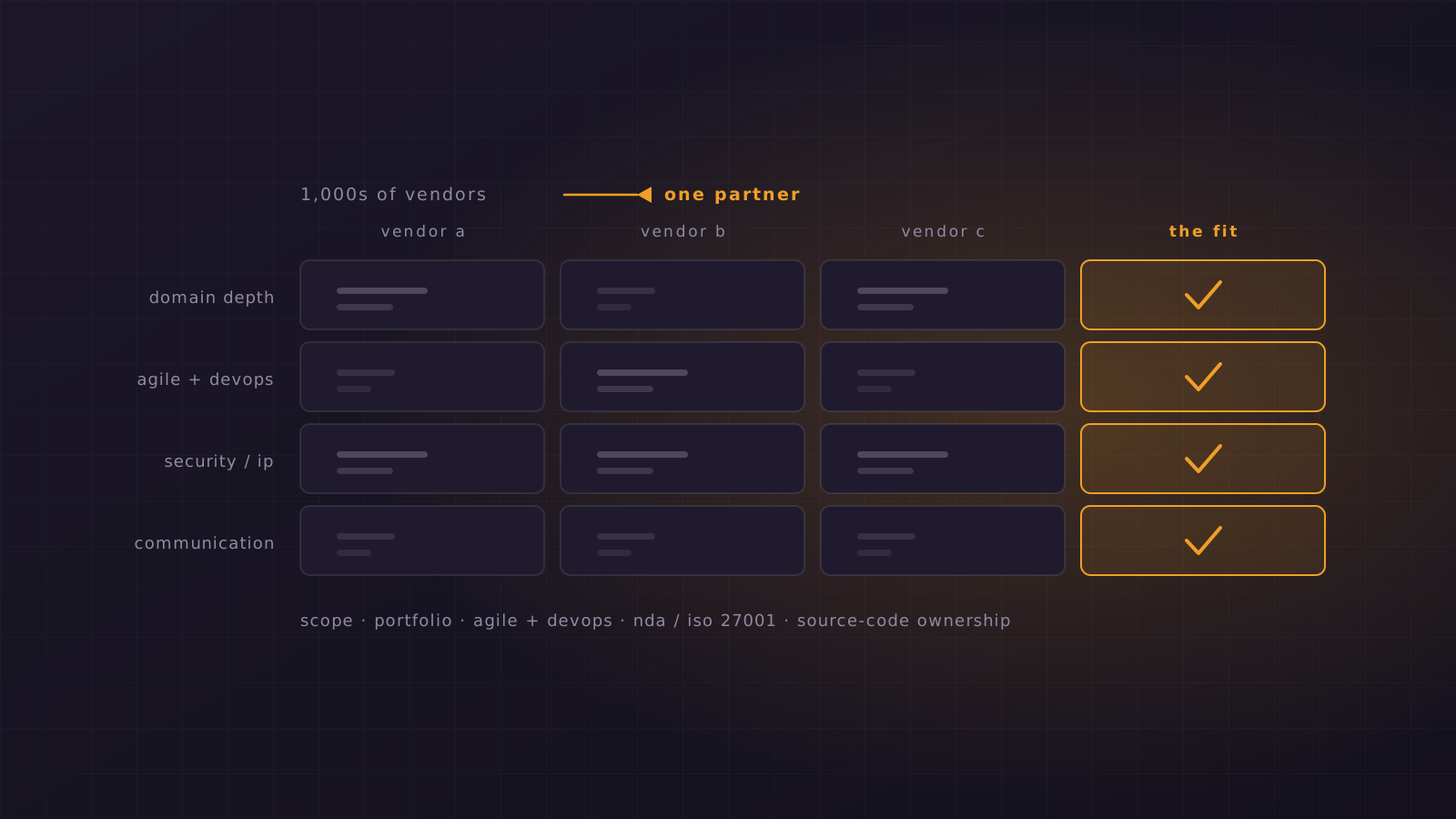
This reality has led enterprises and startups alike to look offshore, with India remaining the undisputed global capital for IT and software engineering. But here lies the challenge: when you decide to partner with a software development company in India, you are faced with thousands of options. Ranging from massive multinational IT conglomerates to boutique dev shops, the sheer volume of choices can be paralyzing.
Choosing the wrong partner can lead to delayed launches, blown budgets, and unscalable spaghetti code. Choosing the right one, however, functions as a massive force multiplier for your business. Here is a comprehensive, step-by-step guide to cutting through the noise and selecting the ideal custom software development partner for your next big project.
1. Start by Defining Your Own Scope and Vision
Before you begin evaluating external vendors, you must have absolute clarity internally. A development partner can only build what you can clearly articulate. Before sending out a single Request for Proposal (RFP), ensure you have defined:
- The Core Problem: What specific business problem is this software solving?
- The Scope: Are you building a Minimum Viable Product (MVP) to test the market, or are you migrating a massive legacy enterprise system?
- The Tech Stack: Do you have a specific technology stack in mind (e.g., MERN, Python/Django, .NET), or are you looking for the vendor to consult and recommend the best architecture?
- The Budget and Timeline: What are your absolute constraints regarding time-to-market and financial resources?
Having a well-documented product requirements document (PRD) will help you instantly filter out companies that do not have the scale or specific expertise to handle your vision.
2. Evaluate Technical Expertise and Domain Experience
It is not enough for a firm to simply know how to code; they need to understand the nuances of your specific industry. A company that builds incredible mobile games might completely fail at building a secure, compliant fintech application.
When evaluating potential partners, look for deep domain expertise. Ask for case studies related to your specific vertical (e.g., healthcare, logistics, e-commerce, banking).
- Did they solve complex architectural challenges?
- Are they familiar with industry-specific regulations like HIPAA for healthcare or PCI-DSS for finance?
- Do they have specialized talent in modern imperatives like Artificial Intelligence, Machine Learning, cloud-native architecture, and blockchain?
3. Scrutinize Portfolios, Case Studies, and References
A sleek website is easy to build; a track record of successful enterprise deployments is not. Dive deep into their past work. Do not just look at the logos of the clients they have worked with — read the actual case studies.
Look for the "how" and "why" behind their previous projects. How did they handle sudden changes in project scope? What was the tangible business impact of the software they delivered (e.g., "reduced operational costs by 40%" or "scaled to handle 1 million concurrent users")? Furthermore, insist on speaking directly with past or current clients. A reputable firm will proudly facilitate these introductions.
4. Assess Communication and Cultural Fit
The most common point of failure in offshore software development is not a lack of technical skill; it is poor communication. The right software development company in India will act as a seamless extension of your own team, bridging any geographical or time-zone gaps through robust operational protocols.
During your initial consultations, evaluate their communication style.
- Are they just "yes men" who agree to every feature without question, or do they push back and offer strategic, technical alternatives that might save you time and money?
- Do they have strong English proficiency across both leadership and the actual developers assigned to your project?
- What project management and collaboration tools do they use (e.g., Jira, Slack, Microsoft Teams, Asana)? Transparency is critical.
5. Demand Agile Methodologies and DevOps Practices
The days of the traditional "Waterfall" development model — where you hand over a spec sheet and wait six months for a finished product — are over. Modern custom software requires an Agile approach.
Ensure your chosen partner operates in Agile sprints, delivering working iterations of your software every few weeks. This allows you to test features, gather user feedback, and pivot if necessary without derailing the entire project. Additionally, inquire about their DevOps practices. A mature agency will utilize Continuous Integration and Continuous Deployment (CI/CD) pipelines, automated testing, and infrastructure-as-code to ensure deployments are fast, secure, and bug-free.
6. Prioritize Data Security and IP Protection
When you outsource custom software development, you are handing over the keys to your intellectual property (IP) and potentially sensitive user data. Security cannot be an afterthought.
Before signing any contracts, ensure the company is willing to sign a comprehensive Non-Disclosure Agreement (NDA). Furthermore, evaluate their internal security protocols:
- Do they follow secure coding practices (like OWASP guidelines)?
- Are they ISO 27001 certified for information security management?
- How do they handle data access among their own employees?
- Do they explicitly state in the contract that your company retains 100% ownership of the source code and IP upon project completion?
Accelerate Your Vision with SoftSolutionsAI
Finding a partner that hits every single one of these benchmarks can be daunting, but it is entirely possible. If you are looking for a partner that combines deep engineering pedigree with strategic business consulting, look no further than SoftSolutionsAI.
SoftSolutionsAI stands out as a premier development partner, dedicated to translating complex business requirements into elegant, scalable software. They go beyond mere execution, operating as a strategic technology partner that utilizes Agile methodologies, rigorous quality assurance, and cutting-edge innovations in AI and cloud architecture. Whether you are a startup building a revolutionary MVP or an enterprise modernizing legacy systems, SoftSolutionsAI provides the transparent communication, ironclad security, and technical mastery required to bring your vision to life flawlessly.
Conclusion
Choosing the right software development company in India is one of the most consequential decisions your business will make. It requires looking past the sales pitch and rigorously evaluating a firm's technical depth, domain expertise, communication standards, and security protocols. By taking a methodical, data-driven approach to your selection process, you can find a dedicated technology partner capable of scaling your operations, driving digital innovation, and securing your competitive edge for years to come.